
motor co.·Precision American Propulsion.
Brushless drone motors, machined, assembled, and certified in New Mexico, USA.
LodeIron Motor Co. builds brushless outrunner motors for drone and UAS propulsion. Every motor is serialized, dynamically balanced, and run on our own dynamometer before it ships.
Two lines, one bench. A commercial line for pilots tired of guessing, and a federal line built on a DFARS-traceable supply chain for programs that have to prove where every part came from.
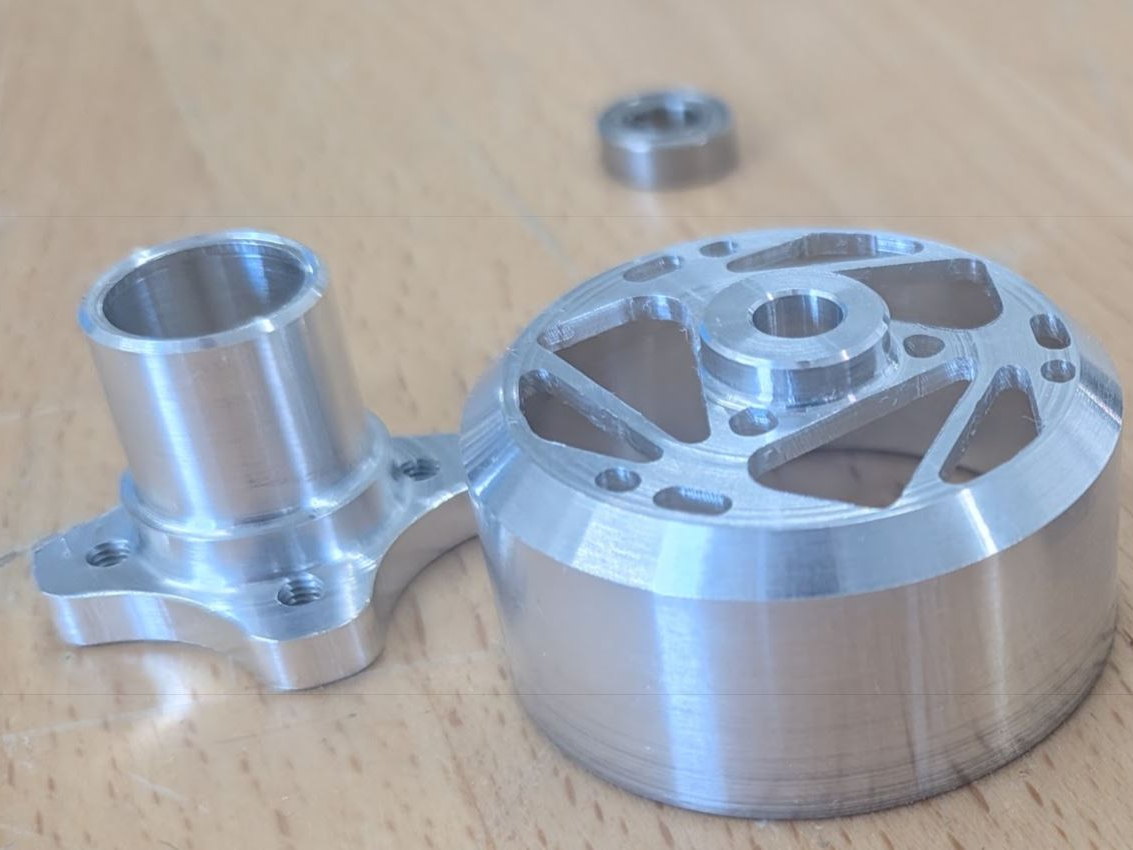
Fig. 1 First articles, 7075-T6 bell and base
Why this exists
Anybody can print a spec sheet. We hand you the measurements.
A motor spec published on a website is a claim about a design. What you actually bought is one specific motor, built on one specific day, from one specific lot of steel and magnet and wire. Those are not the same thing, and the difference is exactly where imported motors quietly fall apart.
and scan code on a finished bell.
Square, 1600px.
Fig. 2 Serial mark, laser ablated
Your own dynamometer curve
Not a curve from a golden sample that shipped to a reviewer. We run your motor on our bench and record what it actually did: thrust, current, RPM, efficiency, and temperature rise across the working range.
Thrust · Current · RPM · EfficiencyA balance record, not a balance claim
Vibration is what eats bearings, blurs footage, and makes a flight controller fight the airframe instead of flying it. Every rotor is dynamically balanced and the measured residual is recorded against your serial.
Measured residual, per serialTraceability back to the material
Your serial ties to the lot of steel, the lot of magnet, the spool of wire, and the day it was built. If a problem ever surfaces in the field, we can tell you what else shares that history and how far it reaches.
Lot · Date · OperatorAll of it behind one scan
The serial and its scan code are laser marked into the bell, not printed on a sticker that surrenders to the first wipe of isopropyl. Point a phone at it and the records come up, three years and four rebuilds later.
Permanent mark · Live recordsBuilt here, start to finish
Three operations, one building, in Ruidoso, New Mexico, USA.
Spindle, tool, chips. 16:9.
Operation 10
Machined
Bells and bases cut from 7075-T6 on our own mill, so tolerances are ours to hold and ours to answer for.
wound stator, front lit. 16:9.
Operation 20
Wound
Wound and terminated in house on high temperature magnet wire, to a pattern we developed and control.
screen visible behind it. 16:9.
Operation 30
Tested
Balanced, run, and measured before it ships. The data goes to your serial record, not into a marketing chart.
The 2812 family
One frame. Three winds. Pick by prop, not by hype.
930KV
Speed and agility
- Props
- 7 to 8 in
- Cells
- 6S
- Shaft
- 5 mm
- Mount
- M3, 19 mm
810KV
The all-rounder
- Props
- 8 to 10 in
- Cells
- 6S
- Shaft
- 5 mm
- Mount
- M3, 19 mm
725KV
Endurance and payload
- Props
- 9 to 10 in
- Cells
- 6S
- Shaft
- 5 mm
- Mount
- M3, 19 mm
The honest comparison
What changes when the motor is built where you can drive to it.
| LodeIron | Typical imported motor in this class | |
|---|---|---|
| Performance data | Measured on your serial, kept on record | One catalog chart for the whole model line |
| Balance | Measured residual recorded per unit | "Precision balanced," no number given |
| Traceability | Serial to material lot and build date | Batch, if anyone kept the record |
| Origin paperwork | DFARS-traceable BOM on the federal line | Country of assembly at best |
| Support | The people who built it answer the phone | A distributor and a time zone |
| Lead time risk | Domestic build, domestic freight | Ocean freight, tariffs, export policy |
We are not going to be the cheapest motor you can buy, and we are not going to pretend otherwise. If price per unit is the only thing that matters for your build, buy the import with our blessing. If you need to defend the choice to a customer, an auditor, or an accident investigator, that is the job we built this shop to do.
Golden hour if you can get it.
Portrait, 3:4. A real photo beats a good one.
Two minutes from launch to a fire marked on the map. Every motor turning that day was built overseas, because I could not get them here.
Founder
In July 2026 I put a drone up to help locate an active wildfire in the Sacramento Mountains. It took about two minutes to find it. I marked it on the government fire map and the crews went to work.
Afterward I started going through the aircraft part by part, asking what I could source domestically if I had to. Plenty of it was harder than it should be. The motors were impossible. I could not buy an American-made motor in that size. Not one.
So LodeIron makes them. Machined here, wound here, assembled here, tested here, and documented well enough that you never have to take my word for anything.
Where we are right now
First units are in build. We are talking to integrators today.
LodeIron is a young company and we would rather say that plainly than pretend otherwise. The 2812 design is frozen, the mill is cutting, and first articles are on the bench. Production units are not shipping yet.
If you build airframes, fly for an agency, or run a program that needs domestic propulsion with real paperwork behind it, this is the right time to talk. Early conversations shape the first production run.
Common questions
The things people ask before they ask for a quote.
Where are LodeIron motors made?
In Ruidoso, New Mexico, USA. Bells and bases are machined on our mill, motors are wound and assembled on our bench, and every unit is balanced and run on our dynamometer before it ships.
What is the difference between the commercial and federal lines?
Same design, same shop, same testing. The federal line is built to a DFARS-traceable bill of materials with origin documentation on the controlled components, which costs more and takes longer to source. The commercial line uses the best available parts without that documentation burden.
Are these NDAA compliant?
The federal line is built specifically to meet the sourcing requirements that programs in this space are held to, and ships with the documentation to show it. Requirements vary by program and by contract clause, so tell us which ones apply to you and we will tell you plainly whether we meet them.
Can I get a sample before committing to a program?
Yes. Early units are going to integrators who will actually fly them and tell us what broke. If that is you, get in touch now rather than later.
Why should I pay more for a domestic motor?
Start with the part that has nothing to do with where it was built. You are buying a motor that was individually measured, balanced, and documented, which shows up as efficiency you can actually plan a flight around and a failure rate you can predict instead of hope for. Ask anyone flying a cinelifter with a cinema camera hanging underneath it. The motors are the cheapest components on that aircraft and the only ones that can turn everything above them into scrap. Same math on a long endurance mapping flight, where a couple of points of efficiency is the difference between finishing the grid and landing early. Then, if you also sell to agencies, fly under federal grant money, or need to keep flying no matter what happens to export policy and tariffs, domestic sourcing stops being a preference and becomes a requirement.